
Are you confident that your current IV cannula supply meets both quality standards and cost targets? When you source an IV Cannula with Injection Port, you need more than a low price—you need consistent performance, clear size identification, reliable sterility, and a design that works in real clinical settings. A poor choice can lead to supply issues, user complaints, and hidden costs. The right product helps you simplify inventory, improve efficiency, and reduce procurement risk.
Why IV Cannula with Injection Port Matters in Modern Procurement
When you source medical consumables, you are not just buying products—you are managing risk, cost, and long-term supply stability. The IV Cannula with Injection Port has become a key item in hospital procurement because it combines multiple functions in one device.
A well-designed IV Cannula with Injection Port helps reduce the need for repeated needle insertions. This improves workflow efficiency and lowers the use of extra accessories. For procurement teams, this means fewer SKUs and simpler inventory management.
In global sourcing, buyers now focus on consistency and usability. A high-quality IV Cannula with Injection Port is not judged by price alone. It must perform well in real clinical settings and remain stable across large-volume orders.
Key Quality Indicators of IV Cannula with Injection Port
When evaluating a IV Cannula with Injection Port, you should focus on practical features that impact daily use.
First, the catheter design matters. A tapered and smooth catheter tip reduces penetration force. This allows easier vein access and minimizes patient discomfort. High-quality products also show strong kink resistance, which helps maintain stable fluid flow.
Second, visibility is important. A translucent hub design allows quick detection of blood flashback during insertion. This small detail can improve accuracy and reduce procedure time.
Third, material selection plays a role. A radio-opaque Teflon cannula allows visibility under imaging, which supports safer positioning when needed.
A reliable IV Cannula with Injection Port also includes a hydrophobic membrane filter. This helps prevent blood leakage and keeps the working area clean. These features are not optional—they are expected by experienced buyers.
Standardization and Size Options in IV Cannula with Injection Port
Procurement efficiency depends on standardization. A IV Cannula with Injection Port should follow clear size coding to avoid confusion during use.
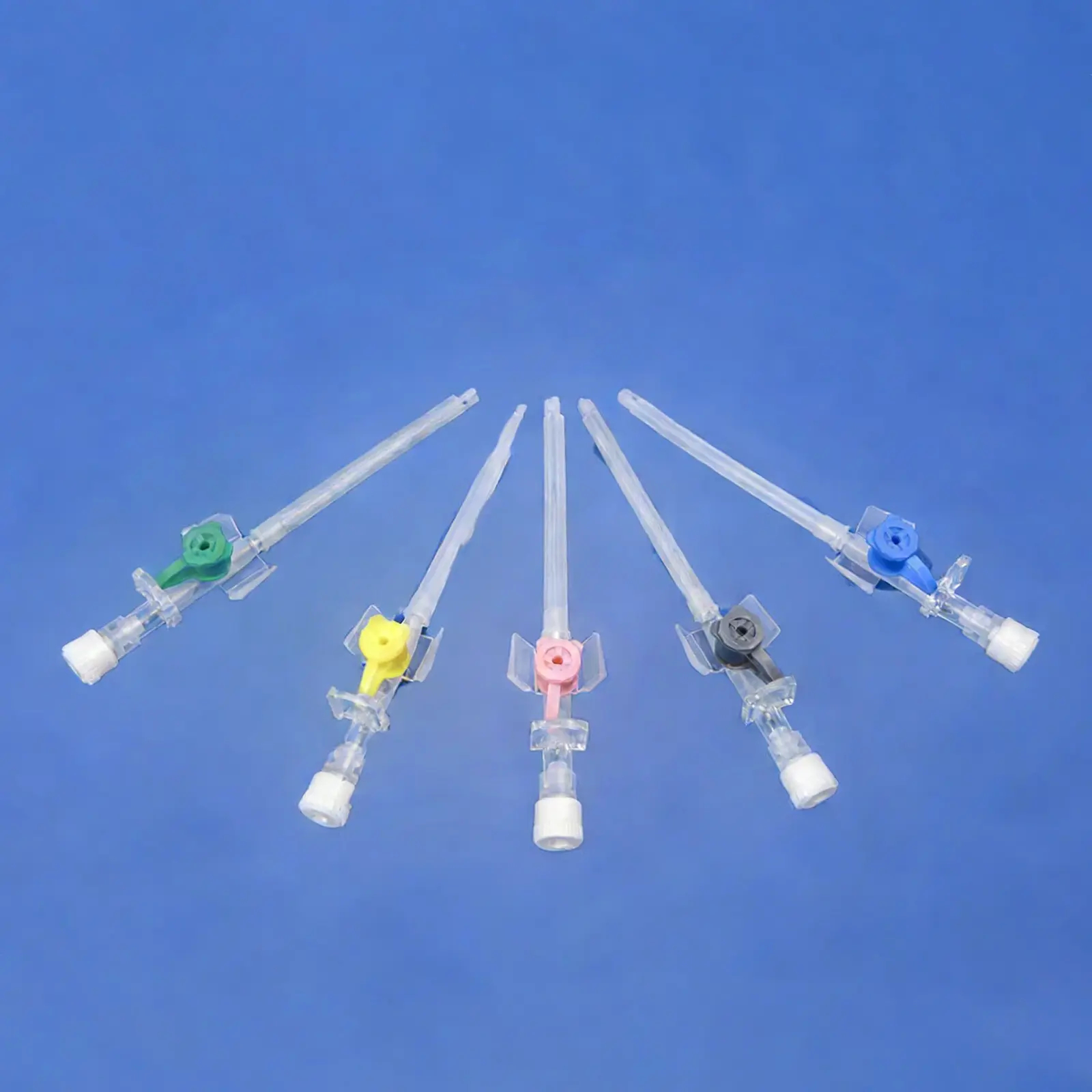
Typical sizes include 14G, 16G, 18G, 20G, 22G, 24G, and 26G. Each size is color-coded, such as red for 14G, grey for 16G, green for 18G, pink for 20G, blue for 22G, yellow for 24G, and purple for 26G.
This color system helps medical staff quickly select the correct size. For buyers, it reduces training needs and lowers the risk of errors.
A consistent IV Cannula with Injection Port product line should offer all common sizes with stable quality across each gauge. This is critical when supplying hospitals or distributors at scale.
Packaging and Sterility Considerations
Packaging is another key factor in procurement decisions. A standard IV Cannula with Injection Port is often packed as 1 piece per blister. This ensures sterility and easy handling.
Bulk packaging, such as 50 pieces per box and 1000 pieces per carton, supports efficient logistics and storage. For large buyers, this format reduces shipping cost per unit and simplifies warehouse operations.
Sterilization also matters. EO gas sterilization is widely used to ensure product safety. A high-quality IV Cannula with Injection Port must meet strict sterility standards without compromising material performance.
Ease of Use and Functional Design
Ease of use directly affects product value. A well-designed IV Cannula with Injection Port allows connection to a syringe by simply removing the filter cap to expose the luer taper end.
This design reduces extra steps and speeds up procedures. For procurement teams, products that improve workflow can lower labor costs over time.
Another key feature is the smooth contact between the cannula tip and the inner needle. This ensures safe and stable venipuncture. A consistent insertion experience is important for both clinicians and patients.
Supply Reliability and OEM Flexibility
In global procurement, supply reliability is as important as product quality. A trusted supplier of IV Cannula with Injection Port should offer stable production capacity and consistent lead times.
OEM availability is also valuable. It allows you to customize branding and packaging based on your market needs. This is especially important for distributors building their own product lines.
A dependable IV Cannula with Injection Port supplier supports long-term cooperation, not just one-time orders.
Reducing Procurement Risk with the Right IV Cannula with Injection Port
Choosing the right IV Cannula with Injection Port helps reduce risks in multiple areas. You can lower product failure rates, avoid supply interruptions, and improve end-user satisfaction.
Buyers who focus on quality indicators, packaging standards, and supplier reliability are more likely to achieve stable procurement outcomes.
In today’s competitive market, the difference between standard and high-quality IV Cannula with Injection Port is clear. It is not just about meeting specifications—it is about delivering consistent performance at scale.
Partner with Sinomed for Reliable Supply
If you are looking for a trusted partner for IV Cannula with Injection Port, Sinomed offers a complete solution. With stable production, OEM support, and strict quality control, Sinomed helps you simplify procurement and reduce risk.
Contact Sinomed today to get product details, samples, or a customized quotation tailored to your market needs.
Post time: Jun-01-2026
